VividProp.io
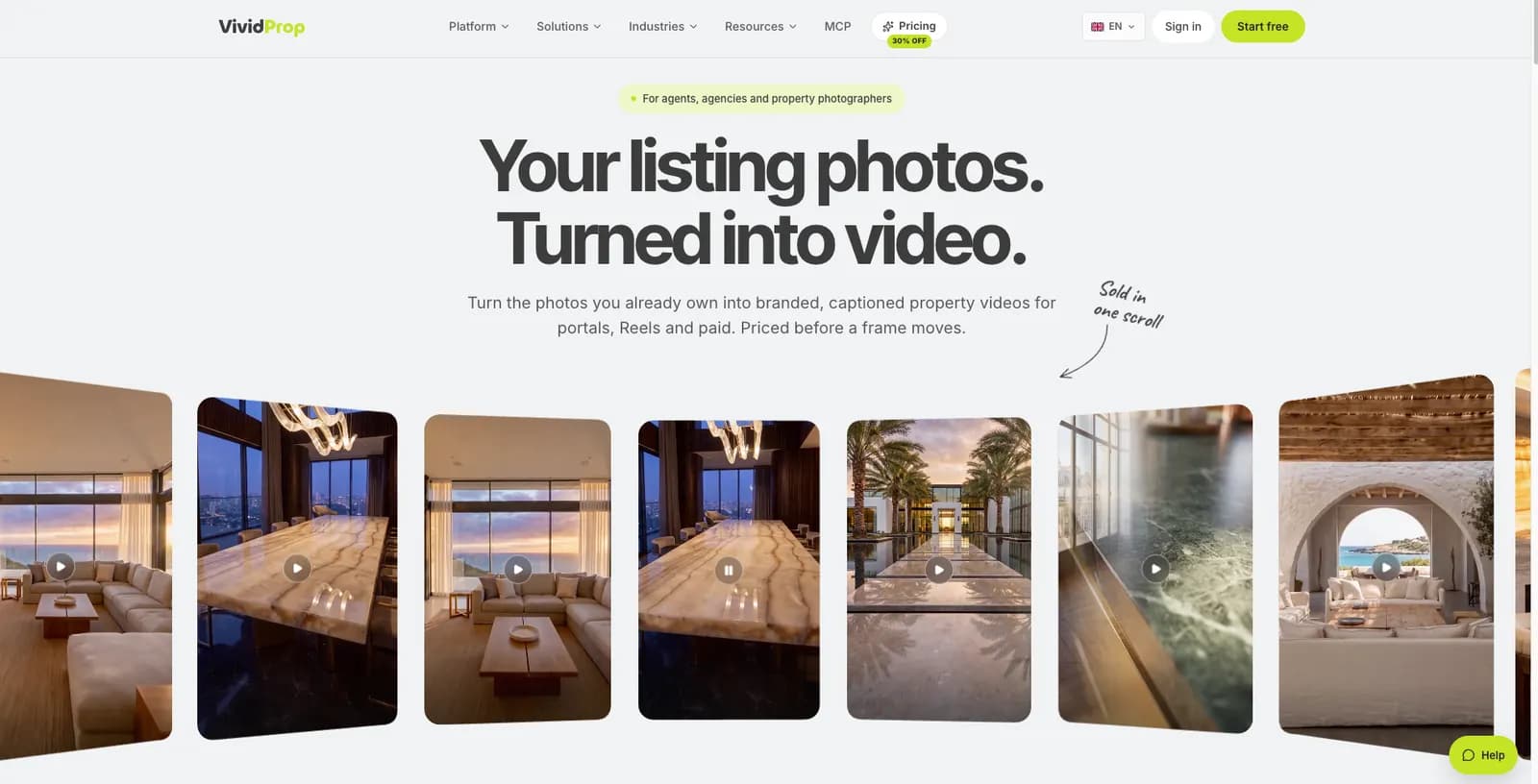
A tool that turns the listing photos an agency already has into branded, captioned property videos.
- My role
- Founder
- Relationship
- Founder
- Timeline
- Ongoing
- Live site
- vividprop.io (opens in a new tab)
- Stack
- Not published. Technology choices are discussed directly where relevant.
01
Business context
Property agencies compete for attention in portals and social feeds, but most of their inventory is still photography. Video performs better and costs more to produce, so most listings never get it.
VividProp is built around a simpler input: the photos already in the listing.
02
The problem
Producing a video per listing requires editing skills or an external vendor, and each agent tends to invent their own captions, logo placement and format.
The result is inconsistent brand presentation and a lot of listings with no video at all.
03
My responsibilities
- Founder: product direction, interface design and hands-on development.
- Designing the generation workflow and the studio interface agents use to review output.
- Defining the brand-kit model that keeps output consistent across listings.
04
Constraints
- Agents are not editors: the workflow has to produce usable output with very few decisions.
- Output must survive the formats and crops of portals, vertical social video and paid placements.
- Generation costs have to be legible to the customer before they commit, which shapes the credits model.
05
The solution
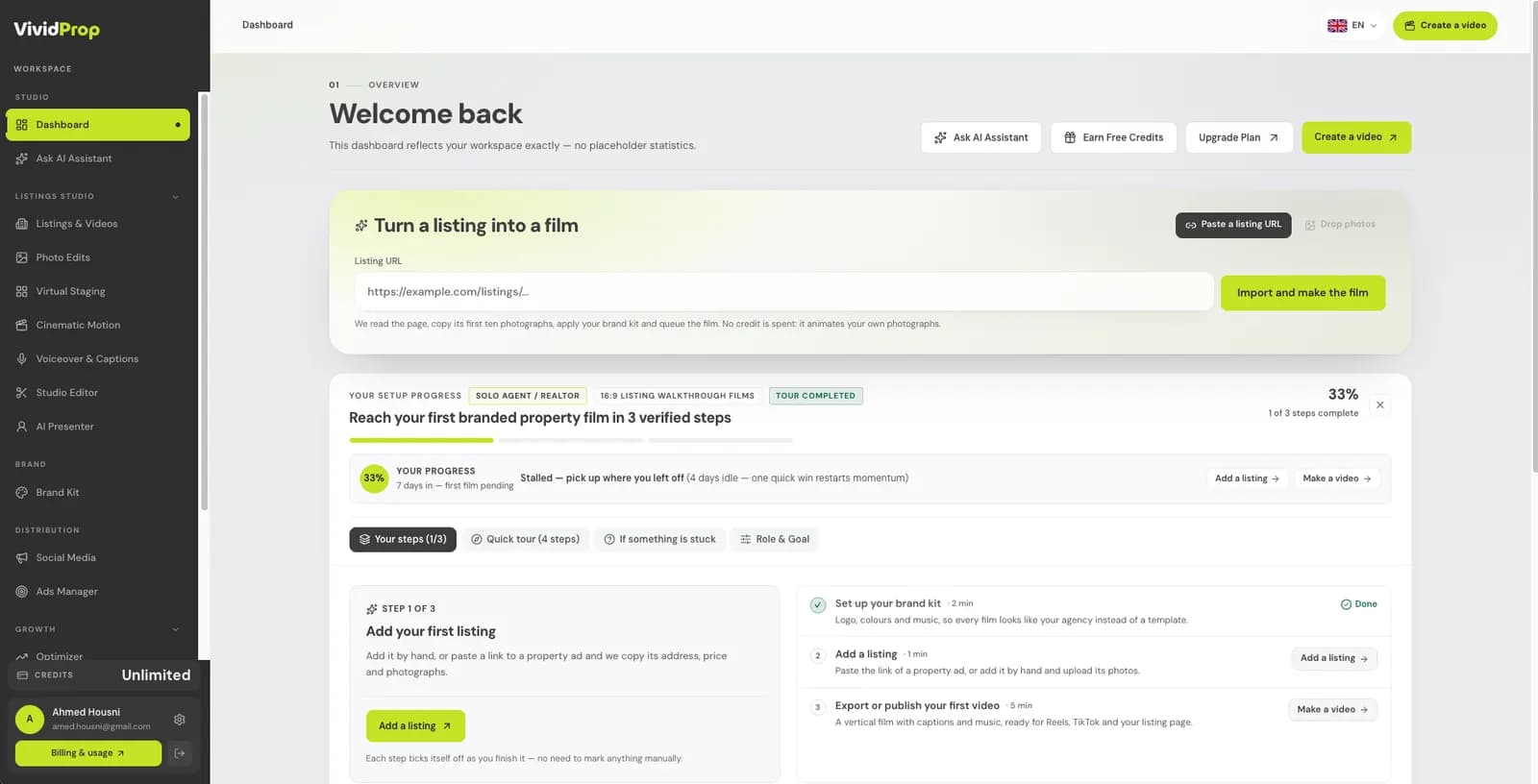
- A listing studio that accepts a property link or photos and returns a branded video.
- Brand kits capture logo, colours and music once, then apply them to every subsequent listing.
- Captioning, voiceover, motion and an AI presenter are handled inside the same studio instead of separate tools.
- Virtual staging and photo editing sit before video generation so the source material can be fixed, not just animated.
- A growth area with credits, limits and a leaderboard keeps usage and plan boundaries visible.
06
Architecture and important decisions
Input
- Listing link or photo upload
- Photo edits
- Virtual staging
Produce
- Cinematic motion
- Voiceover & captions
- AI presenter
Brand
- Brand kit
- Studio editor
- Social & ads output
Run
- Credits & plans
- Usage leaderboard
- AI assistant
Functional map · internal architecture and implementation details are not published
One input, one output
The product is deliberately narrow: photos in, branded video out. Narrow input makes the workflow learnable in minutes and keeps output quality predictable.
Brand configuration is upstream
Logo, palette and music are set once in a brand kit and applied automatically, instead of being re-entered per listing.
Costs are visible before generation
Credits appear next to every action so an agency can judge whether a listing is worth a video before spending on it.
07
Trade-offs
- Generation quality is bounded by the source photos, so the product includes editing and staging rather than promising an escape from bad input.
- Template-driven output is fast and consistent, at the cost of some creative control that a human editor would have.
08
What the product looks like
09
Verified outcomes and deliverables
- A live product with self-serve onboarding and free starting credits.
- An end-to-end pipeline from listing photos to branded, captioned video.
- A reusable brand system applied across every generated asset.
No revenue, user counts, conversion rates or client metrics are published: none are verified for public use.
10
Lessons and next steps
- For non-designers, fewer choices produce better and more consistent output than more controls.
- Usage limits belong in the interface, not in a pricing page customers read afterwards.
Next
- Shorten the path from a portal listing URL to a finished video.
- Keep improving how much of the brand kit can be inferred from an existing listing page.